← All research
Research programme 01
The p53 isoform network
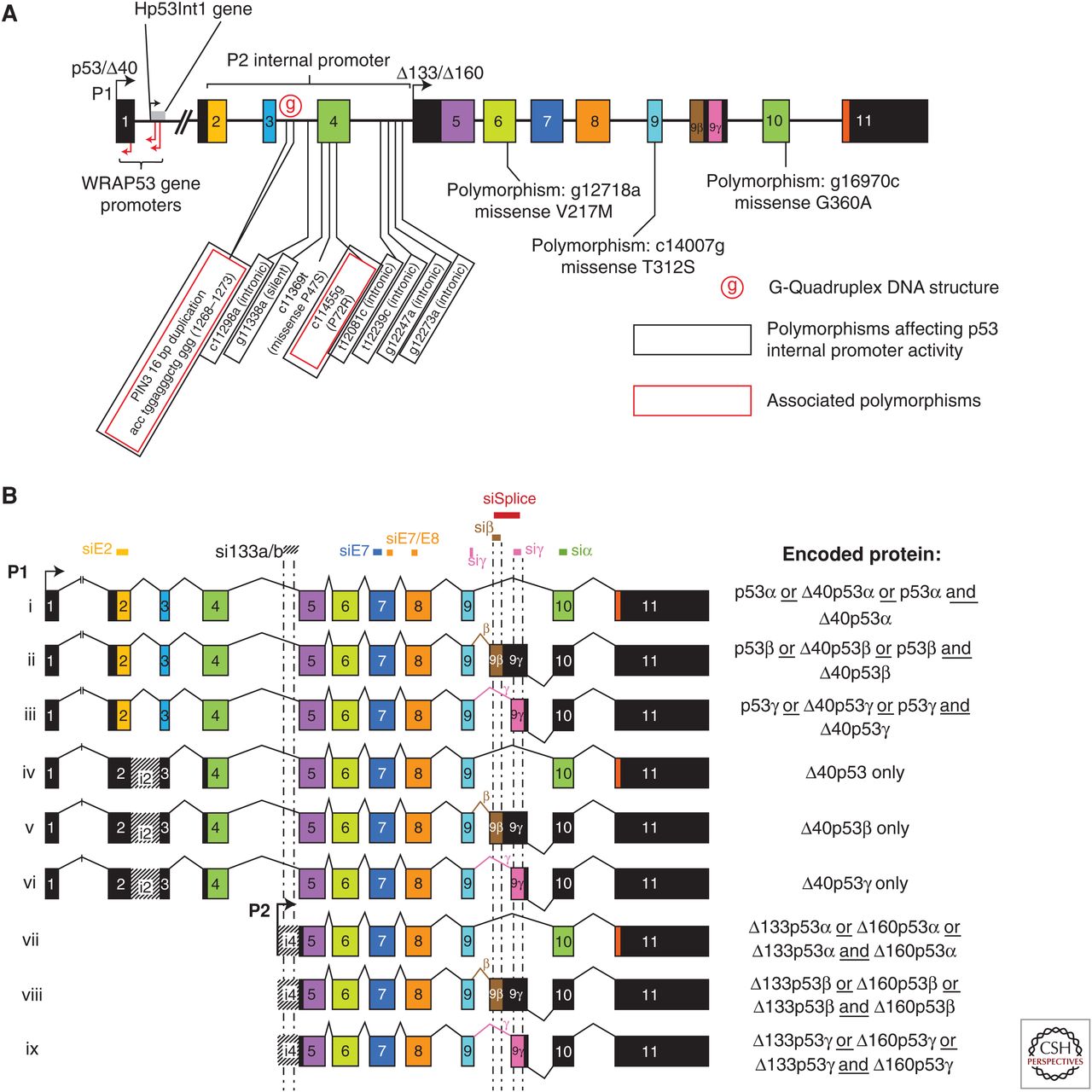
We study TP53 as a multi-protein system. Alternative promoters, translation starts and RNA splicing generate distinct p53 isoforms that combine to shape cellular responses to stress.
This programme maps the molecular architecture that expands TP53 beyond canonical p53α. It examines how promoter choice, RNA processing and translation produce isoforms with different N- and C-termini, expression patterns and biochemical properties.
Rather than assigning every outcome to one dominant protein, we study the relative abundance and interaction of co-expressed isoforms. This isoform-resolved view helps explain how the same locus supports sharply different responses across tissues and biological contexts.
Approaches
- Isoform-specific antibodies and detection protocols
- Molecular and cellular models of TP53 regulation
- Functional comparison of defined isoform combinations
- Cross-species and evolutionary analysis
Selected work
- p53 isoforms can regulate p53 transcriptional activity (2005)
- p53 isoforms through evolution (2010)
- p53 Isoforms: Key Regulators of the Cell Fate Decision (2016)