p53 isoforms · Cell fate · Cancer
Understanding p53 at isoform resolution
We investigate how the family of proteins encoded by TP53 controls cell fate—and how its disruption shapes cancer, ageing and treatment response.
Our research
One gene.
A network of proteins.
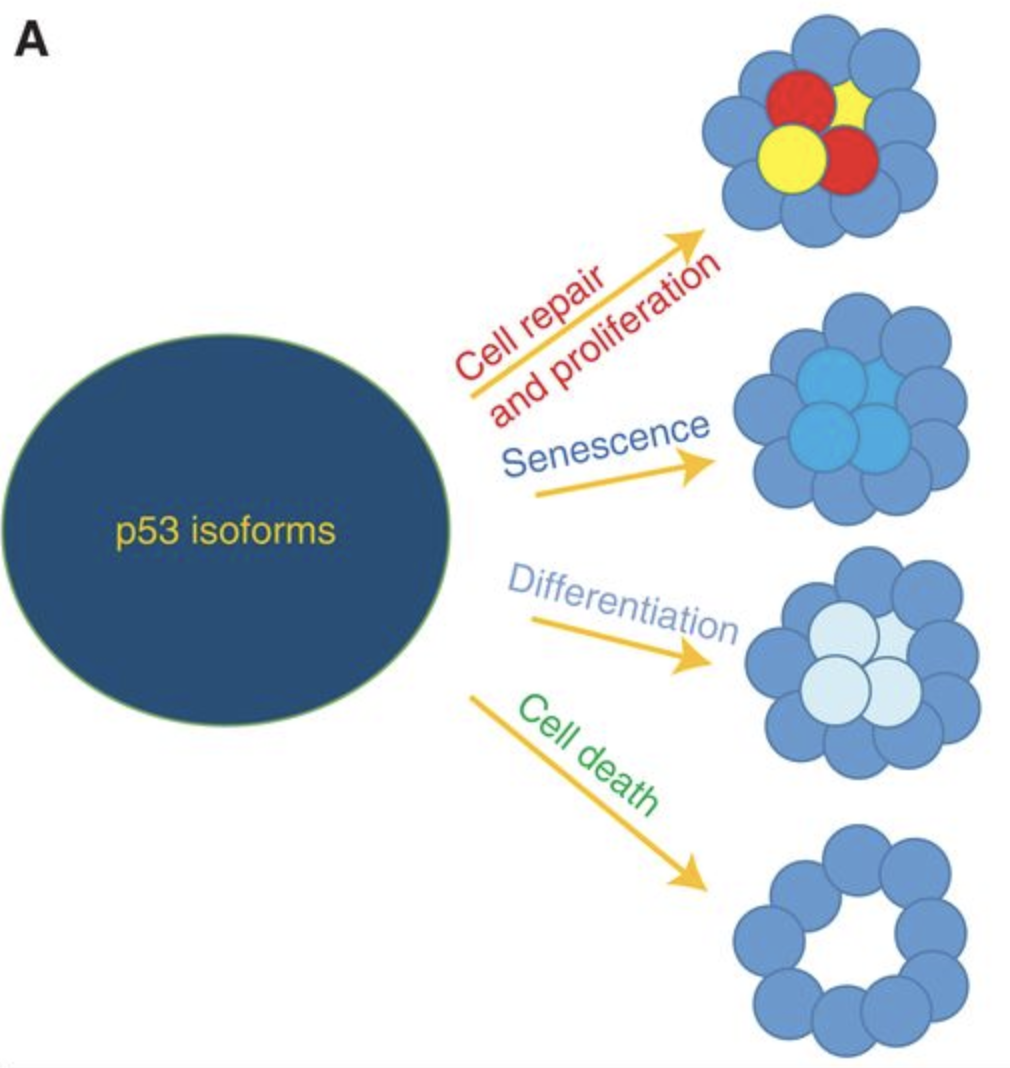
p53 is not a single protein acting alone. TP53 produces a coordinated network of isoforms whose balance helps determine whether a cell repairs, adapts, senesces, dies or becomes cancerous. Our laboratory combines fundamental molecular oncology with clinically relevant models to understand this network and translate it into better biomarkers and therapeutic ideas.
Read about our research programmes →Research programmes
What we study
The p53 isoform network
We study TP53 as a multi-protein system. Alternative promoters, translation starts and RNA splicing generate distinct p53 isoforms that combine to shape cellular responses to stress.
Learn more →02Cell fate and adaptive homeostasis
We investigate how p53-isoform balance influences apoptosis, senescence, proliferation, DNA repair and tissue regeneration.
Learn more →03Cancer behaviour and patient stratification
We examine how altered p53-isoform expression affects tumour invasion, treatment response and patient outcome.
Learn more →04Diagnostics and therapeutic translation
We develop isoform-specific tools and apply them to cancer predisposition, biomarker development and therapeutic strategies.
Learn more →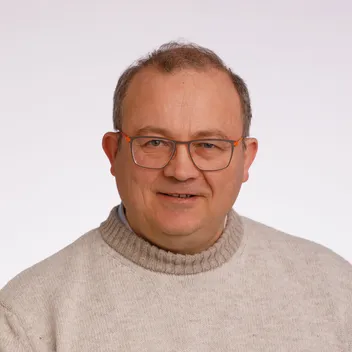
Principal investigator
Dr Jean-Christophe Bourdon
Senior Lecturer in Cancer Research
Dr Bourdon leads the Molecular Oncology laboratory at the University of Dundee School of Medicine. He is internationally recognised for the discovery of human p53 isoforms and for establishing their roles in cell fate, cancer and ageing. His research connects fundamental p53 biology with cancer diagnostics, inherited risk, treatment response and therapeutic development.
Meet the lab →Join the lab